



ACS Nano: Wuhan University of Technology Constructs Sub-10nm TiO2/SiOx Bicontinuous Hybrid with Mutual Stabilization Effect for Lithium Ion Storage
Release time:
2023-01-30
TiO2 has good mechanical stability, ionic conductivity and cycle performance, and is a promising anode material for lithium-ion batteries, but its theoretical capacity is very low, which has been an important reason for hindering the commercial application of TiO2.
In this nano-scale hybrid material with a bicontinuous structure, bridged TiO2 nanoparticles are densely arranged in a worm-like SiOx network structure to form a bicontinuous "interpenetrating" structure. The researchers used transmission electron microscope three-dimensional reconstruction Technology confirmed the bicontinuous structure of this material. Subsequently, they used advanced in-situ transmission electron microscopy characterization techniques to reveal the "mutual stabilization (mutual-stabilizing effect)" effect of TiO2/SiOx bicontinuous composites, and found that the two intercalated (interpenetrating) TiO2 and SiOx active components inhibit each other's volume expansion through their rich contact interfaces, thereby reducing stress.This "mutual stability" effect is defined as: the force generated by the volume expansion of one phase is opposite to the force generated by the expansion of the other phase, thus canceling each other out. This property compensates for the volume expansion of the overall material and enhances the structural integrity of the material during cycling. In addition, they also tested the electrochemical properties of this material and found that even if it contains 82wt% TiO2, it has a high capacity, long life (∼ 671 mAh/g after 580 cycles at 0.1 A/g), and a gain effect of low volume expansion (~ 14%). The relevant research results ofare published in ACS Nano under the title of "Constructing Sub 10 nm Scale Interfused TiO2/SiOx Bicontinuous Hybrid with Mutual-Stabilizing Effect for Lithium Storage. Yu Ruohan of Wuhan University of Technology is the first author of the paper, and Professor Zhou Liang, Professor Wu Jinsong and Professor Mai Liqiang are the co-corresponding authors of the paper.Original Link: structural Design and Electron Microscopy Characterization of https://pubs.acs.org/doi/10.1021/acsnano.2c10381?fig=tgr1&ref=pdf
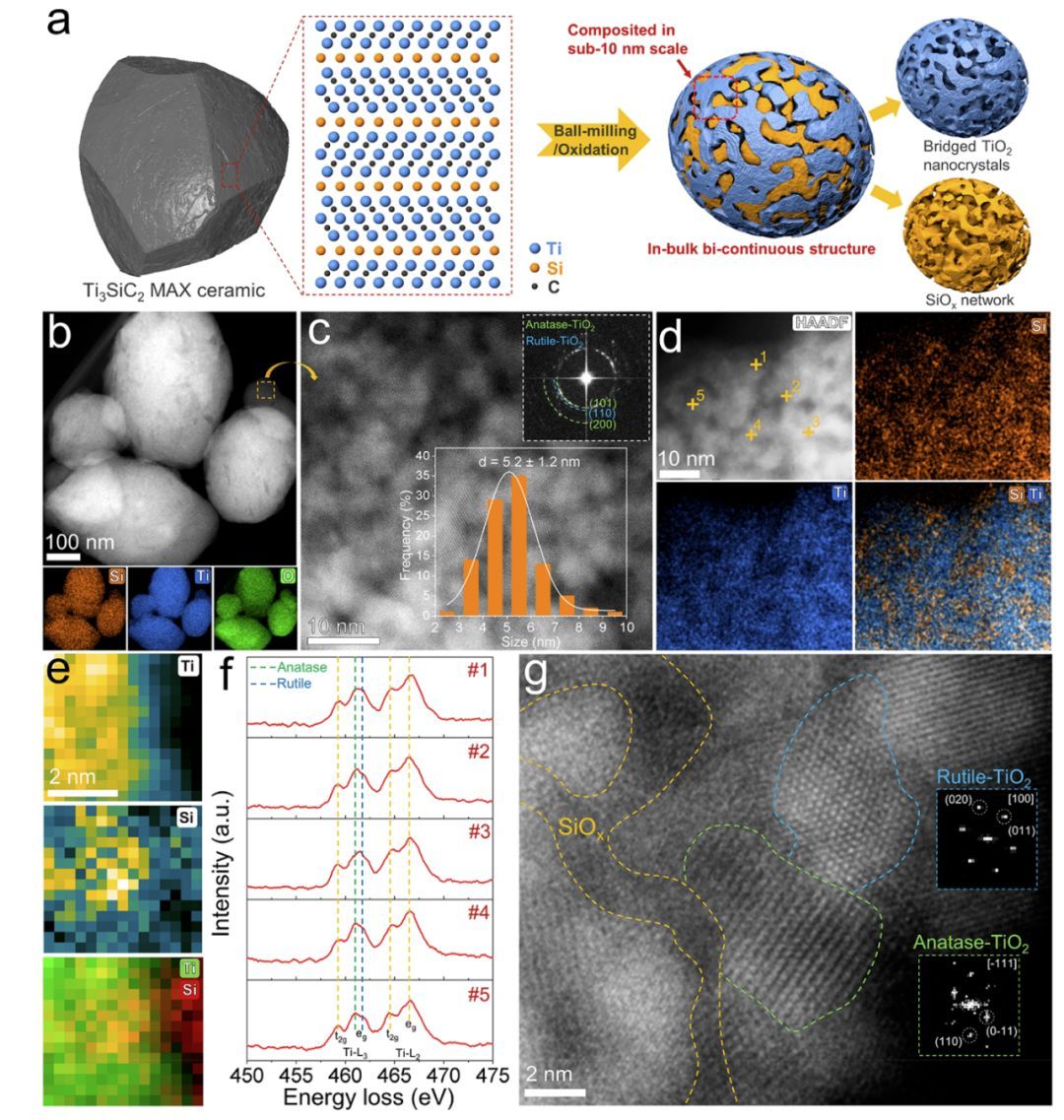
Figure 1 TiO2/SiOx Hybrid
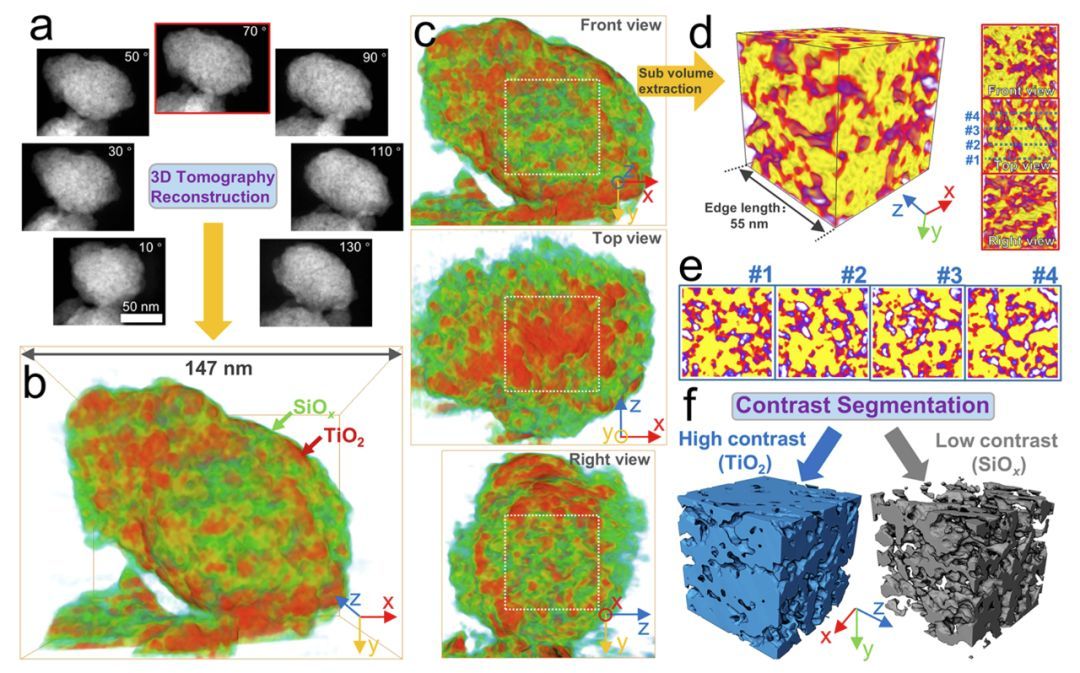
Figure 2 Three-dimensional Reconstruction Analysis of Sub10nm Bi-continuous Structure
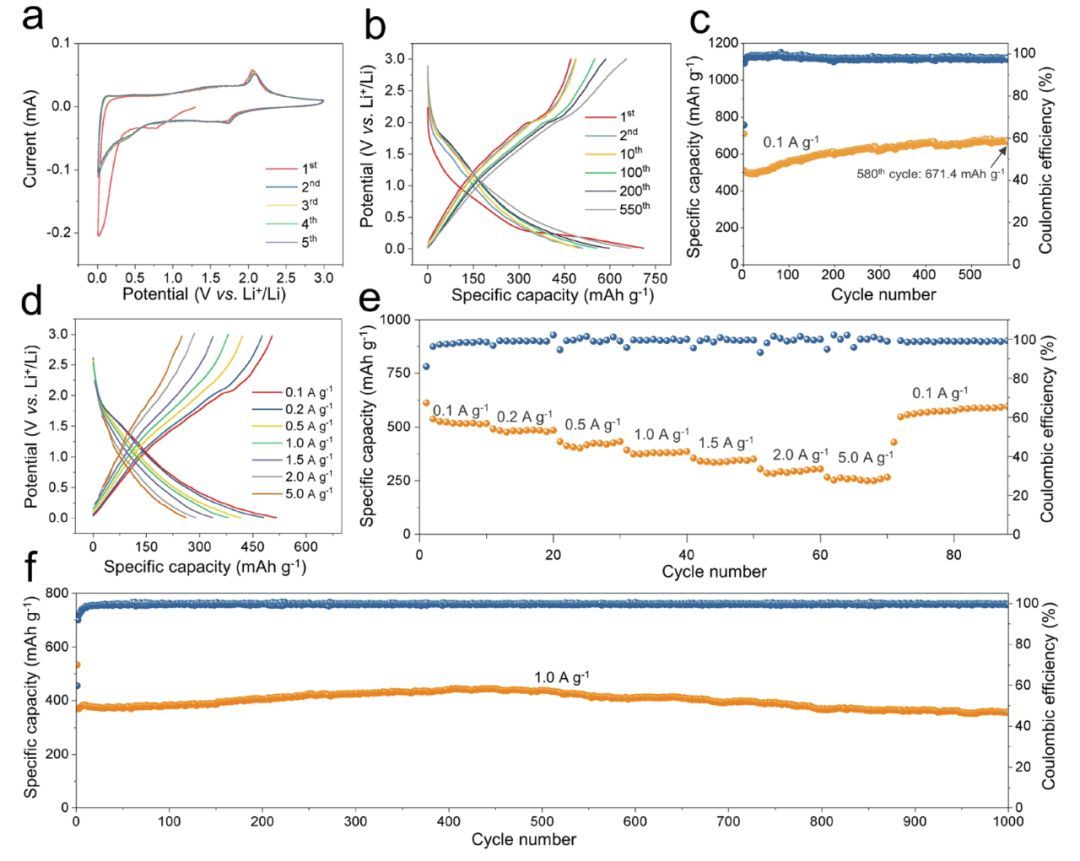
Figure 3 Electrochemical characterization of TiO2/SiOx hybrid anode materials
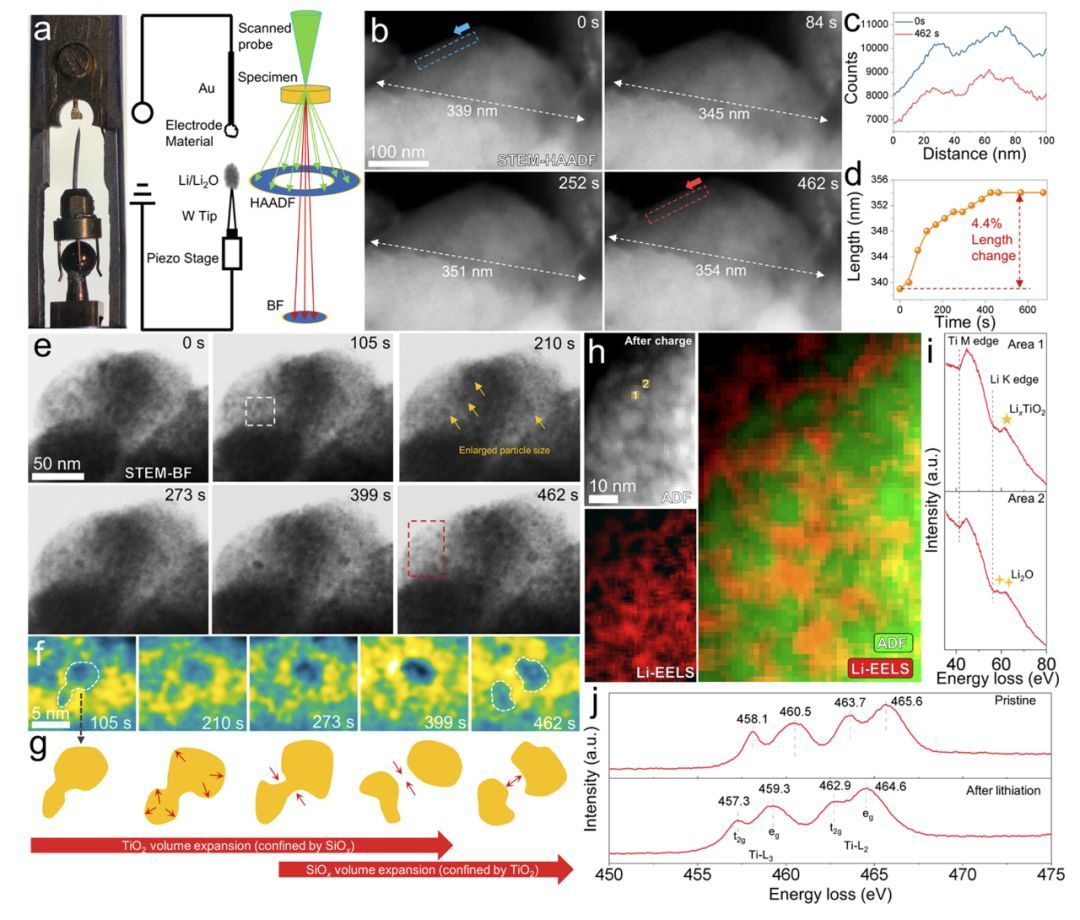
Figure 4 In situ STEM/EELS characterization of the lithiation process of TiO2/SiOx hybrid materialsIn this work, through the simple oxidation process of MAX Ti3SiC2 ceramics, researchers have synthesized a sub -10 nm TiO2/SiOx hybrid with a bicontinuous structure by using its natural dispersion of Ti/Si atoms, in which bridging heterogeneous TiO2 nano-interpenetrates in a worm-like SiOx network. When TiO2/SiOx is used as a lithium-ion battery anode material, it exhibits "mutually stable" behavior. The two closely packed components spatially confine and buffer each other's volume effect, and relieve stress during lithiation through a rich interface. TiO2/SiOx composites exhibit good volume expansion effect and strong structural integrity. This work shows that reasonable structural design can provide ideas for the development of the next generation of high-capacity, long-life lithium-ion battery anode materials.PicoFemto of Zeyou Technology (ZEPTOOLS)®In this work, a series of in-situ TEM-STM sample rods provide researchers with in-situ STEM to observe the volume expansion rate and structural integrity of negative electrode materials during the reaction process, providing direct evidence for the behavior of "mutual stability". At the same time, in-situ EELS is used to observe Li distribution and valence state changes of Ti before and after lithiation.
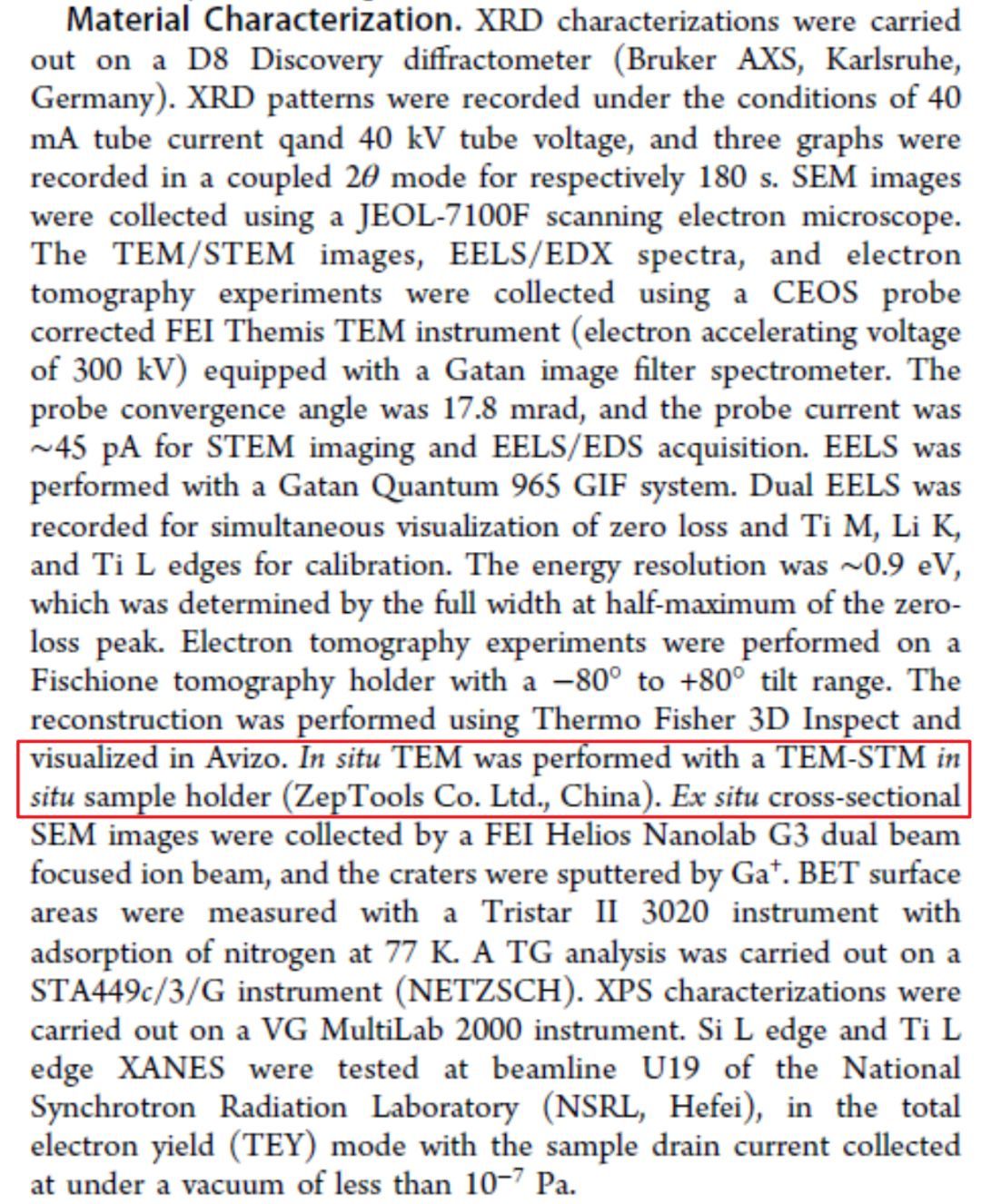
Figure Experimental Method
Related News
Share

Contact Us
Mobile Phone: 15756003283
Email: support@zeptools.com、micage@zeptools.com
Address: No.15, Electronic Venture Park, Dongshi, Tongling City, Anhui Province, China