



Exploring the Benefits of Precision with Piezo Stages in Instrumentation
Release time:
2025-03-20
Exploring the Benefits of Precision with Piezo Stages in Instrumentation Table of Contents Introduction to Piezo Stages What is a Piezo Stage? How Piezo Stages Work Benefits of Using Piezo Stages High Precision Movement Fast Response Time Robust Design Temperature Stability Applications of Piezo Stages in Variou
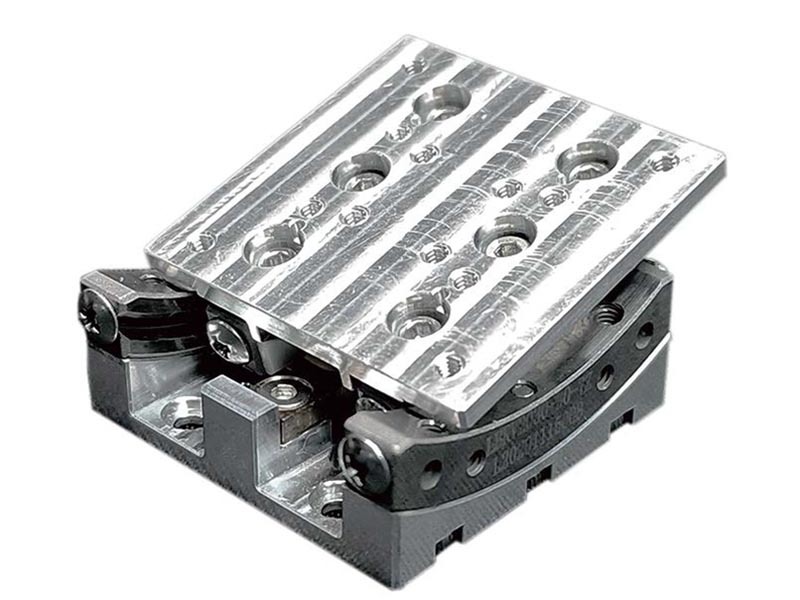
Piezo stages are precision positioning devices that utilize piezoelectric materials to achieve movement. These materials generate an electric charge in response to mechanical stress, enabling them to produce precise movements when an electric voltage is applied. Piezo stages can achieve sub-micron resolutions, making them indispensable in applications that demand high accuracy.
How Piezo Stages Work
Piezo stages operate on the principles of piezoelectricity. When voltage is applied to the piezoelectric material, it undergoes a deformation, resulting in movement. This mechanism allows for incredibly precise control of position, often in the range of nanometers. The key components of a piezo stage include:
- Piezoelectric Actuators: These are the heart of the piezo stage, responsible for generating movement.
- Control Electronics: These manage the voltage applied to the actuators, allowing for fine-tuned adjustments.
- Feedback Systems: Many piezo stages include feedback systems that continuously monitor position, ensuring accuracy and repeatability.
Benefits of Using Piezo Stages
Piezo stages offer a multitude of advantages that make them a preferred choice in many high-precision applications. Below are some of the key benefits:
High Precision Movement
One of the standout features of piezo stages is their ability to achieve **high precision movement**. With resolutions that can reach down to a few nanometers, these devices enable researchers and engineers to perform tasks that require intricate positioning, such as aligning optical elements in a laser system or positioning samples in microscopy.
Fast Response Time
Another significant advantage is the **fast response time** of piezo stages. They can achieve full range movement in milliseconds, allowing for rapid adjustments and dynamic control. This capability is particularly beneficial in applications like laser beam steering or in automated assembly lines, where speed is crucial.
Robust Design
Piezo stages are designed to withstand environmental and operational stresses. Their **robust design** ensures longevity and reliability, making them suitable for both laboratory settings and industrial environments. Additionally, their lack of moving parts reduces wear and tear, leading to lower maintenance costs and extended service life.
Temperature Stability
Precision is not just about mechanical movement; it also involves maintaining performance across varying environmental conditions. Piezo stages exhibit excellent **temperature stability**, ensuring consistent performance even under fluctuating temperatures. This feature is crucial for applications in sensitive environments, such as semiconductor manufacturing or precision metrology.
Applications of Piezo Stages in Various Industries
The versatility of piezo stages allows them to be utilized in numerous fields. Let's explore some of the primary applications across various industries.
Scientific Research
In scientific research, piezo stages play a vital role in experiments that require high precision and accuracy. They are commonly used in:
- Atomic Force Microscopy (AFM)
- Scanning Tunneling Microscopy (STM)
- Laser microscopy for sample analysis
Biomedical Engineering
Biomedical applications leverage the capabilities of piezo stages in areas like:
- Micro-manipulation of cells and biological samples
- Surgical instruments requiring precise adjustments
- Instrumentation for drug delivery systems
Optics and Photonics
In optics and photonics, piezo stages are essential for:
- Aligning optical components in laser systems
- Adjusting lens positions in optical instruments
- Implementing beam steering mechanisms
Choosing the Right Piezo Stage for Your Needs
Selecting the appropriate piezo stage depends on various factors, including:
- Required Precision: Determine the level of precision needed for your application.
- Load Capacity: Assess the weight and size of the components you will be moving.
- Environmental Conditions: Consider the operating environment and any specific requirements, such as temperature control.
- Integration: Ensure the piezo stage can be easily integrated into your existing systems and workflows.
Maintenance and Care for Piezo Stages
To ensure optimal performance and longevity of piezo stages, proper maintenance is essential. Here are some tips:
- Regularly inspect the stages for signs of wear or damage.
- Keep the surfaces clean to prevent contamination that could affect movement.
- Follow the manufacturer's guidelines for voltage and operating conditions to avoid overstressing the actuators.
Piezo stages represent a cutting-edge solution for achieving unparalleled precision in various applications. Their advancements in technology not only enhance performance but also open new avenues for innovation in multiple industries. As we continue to explore and expand the possibilities of piezoelectric technology, the potential for more refined and efficient applications is limitless. Embracing piezo stages will undoubtedly lead to more accurate measurements, improved outcomes, and significant advancements in the realms of science, engineering, and technology.
Related News

Contact Us
Mobile Phone: 15756003283
Email: support@zeptools.com、micage@zeptools.com
Address: No.15, Electronic Venture Park, Dongshi, Tongling City, Anhui Province, China