


Popular Applications
ZEPTOOLS

Scientific Research
The scanning electron microscopes and in-situ measurement systems developed independently by ZEPTOOLS have achieved numerous high-impact research outcomes in cutting-edge scientific projects.
Solution
Solution

Metal materials represented by gold are often used as electrodes in micro/nano electromechanical systems (Micro/nano electromechanical systems) and nano electronic devices. In the working environment, especially in the system with high integration, these materials may withstand high current density.

With the miniaturization and high integration of devices, it is necessary to study the mechanical properties of nano-scale iron-based metal materials and explore their micro-deformation mechanism. Compared with dislocation slip, twinning is a typical strain energy relaxation mode with displacement characteristics, which also produces many interesting phenomena, such as superplasticity and pseudoelasticity. The deformation twinning mechanisms in close packed hexagonal metals (HCP) and face-centered cubic metals (FCC) are well studied, but the deformation twinning of body-centered cubic metals is relatively less studied, and some of the microscopic deformation mechanisms are still ambiguous.
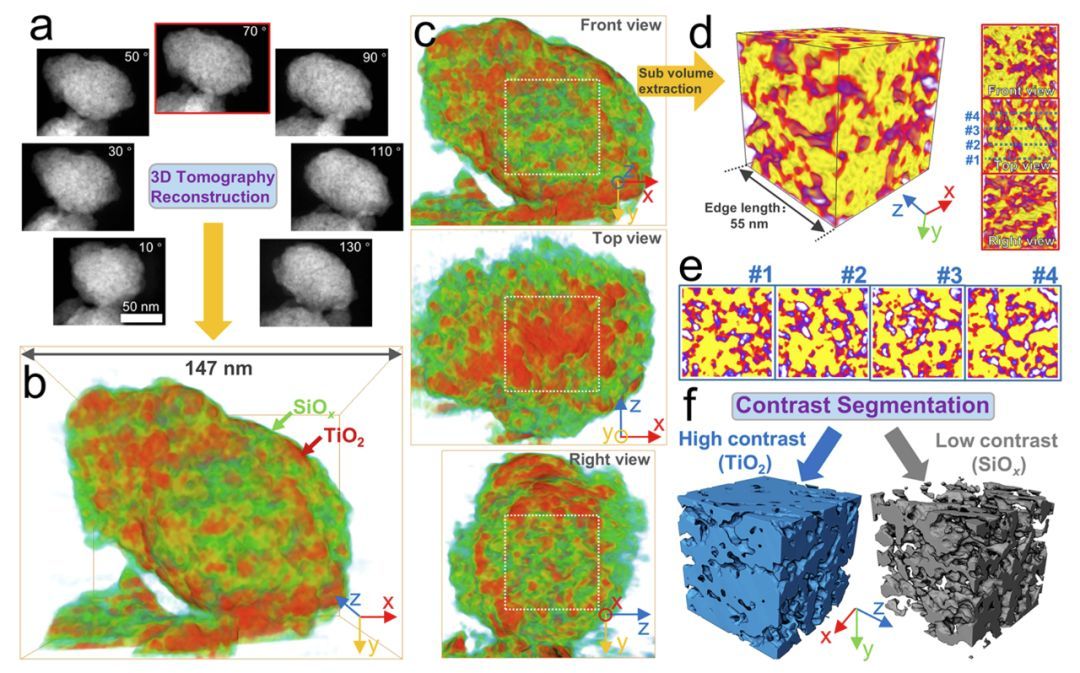
TiO2 has good mechanical stability, ionic conductivity and cycle performance, and is a promising anode material for lithium-ion batteries, but its theoretical capacity is very low, which has been an important reason for hindering the commercial application of TiO2.

Ice is a solid form of water in nature, and it also exists widely in nature. The study of ice structure and formation mechanism is very important to cloud physics and low temperature storage physics, so scientists have a long history of ice research. When it comes to the existence of ice on a smaller scale, we are most likely to think of snowflakes. As shown in the figure below, snowflakes have obvious six-fold symmetry, because ice mostly exists in the hexagonal phase (Ice Ih) in nature.

Liquid crystal display (Liquid Crystal Display, LCD) is the current social application very much display, in daily life everywhere. LCD is mainly composed of color filter substrate (Color filter,CF), TFT array (TFT Array) substrate and backlight module (Back light unit).

The Application of ZEM18 in Semiconductor Industry
Scanning electron microscopy (SEM) is an essential tool widely used in materials science, semiconductor technology and other fields. It can characterize the microscopic morphology of material by detecting the electronic signal excited by the surface of the sample.

Contact Us
Mobile Phone: 15756003283
Email: support@zeptools.com、micage@zeptools.com
Address: No.15, Electronic Venture Park, Dongshi, Tongling City, Anhui Province, China