


Popular Applications
ZEPTOOLS

Scientific Research
The scanning electron microscopes and in-situ measurement systems developed independently by ZEPTOOLS have achieved numerous high-impact research outcomes in cutting-edge scientific projects.
Solution
Solution
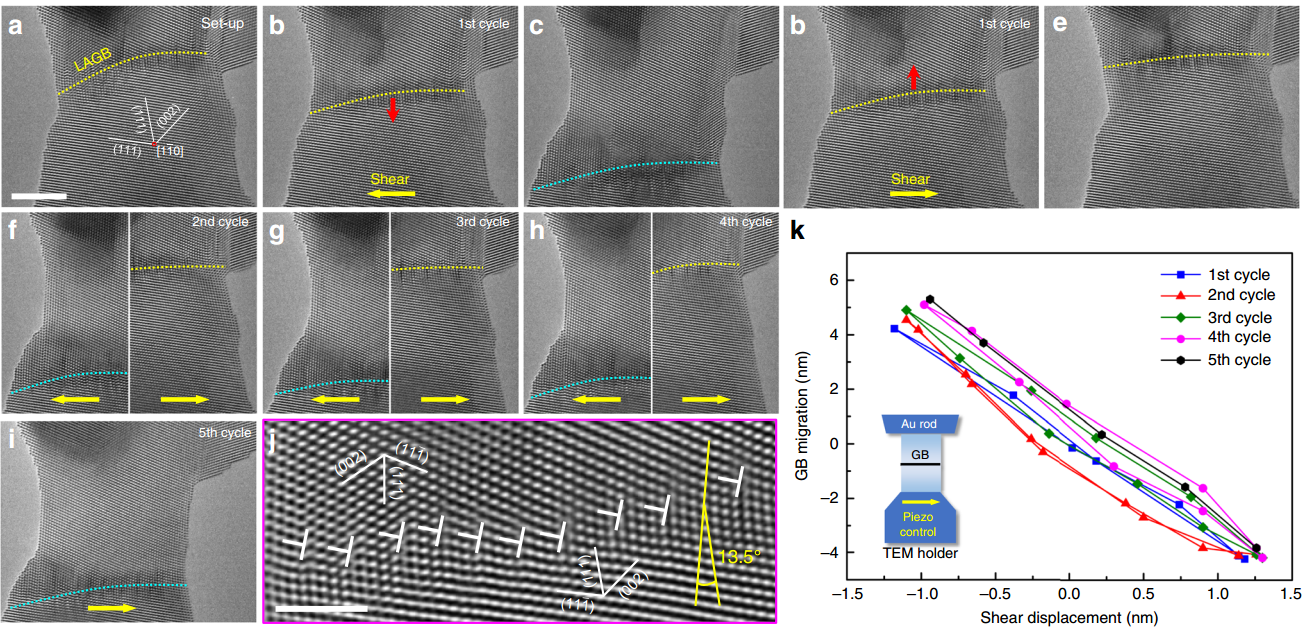
The structural stability and reliability of nanomaterials play a decisive role in the performance of nanodevices. Irreversible microstructure damage induced by stress/strain during long-term service often leads to device function degradation or even failure, and nanomaterials are prone to non-uniform nucleation during cyclic loading or deformation, which directly induces shear localization and material performance degradation.
Alkali metals have been widely studied in the fields of medicine, batteries and so on. However, due to the limitations of chemical reactivity and electron/ion beam sensitivity, the inherent atomic structure of alkali metals and their basic properties are difficult to reveal.

Two-dimensional (2D) materials exhibit special physical and chemical properties due to their atomically ultrathin structure. However, making two-dimensional materials composed of single-element metal atoms remains challenging.

Two-dimensional ferromagnetic materials with topological structures have important application prospects in the field of spintronic information memory devices. As a result, the search for such a magnetic state with a unique spin structure has never stopped.

Domestic desktop scanning electron microscope is coming
The domestic desktop scanning electron microscope is a small size, can be placed on the experimental bench-top operation of the desktop electron microscope. So how small can an electron microscope be? The answer may be beyond your imagination.

At present, the research on the structural evolution of lithium sulfide during the operation of lithium-sulfur (Li-S) battery is not sufficient. Whether the low electronic conductivity or low ionic conductivity of lithium inhibits the decomposition of lithium sulfide during charging is still controversial. In addition, the decomposition pathway of lithium sulfide is not clear.

Contact Us
Mobile Phone: 15756003283
Email: support@zeptools.com、micage@zeptools.com
Address: No.15, Electronic Venture Park, Dongshi, Tongling City, Anhui Province, China